
What business to open in 2026: an unobvious bet on mitochondrial health
VILAVI President Dmitry Laevsky shared why he chose the mitochondrial field and why he is confident that this business is the future
Contents
- What kind of business people need: a checklist
- Personal experience as a quality filter
- How to form your own category step by step
- Why mitochondrial health specifically
- What business is profitable in terms of format
- What business will survive in 2026: trends
- Conclusion: which business is the most effective
Contents
- What kind of business people need: a checklist
- Personal experience as a quality filter
- How to form your own category step by step
- Why mitochondrial health specifically
- What business is profitable in terms of format
- What business will survive in 2026: trends
- Conclusion: which business is the most effective
According to Dmitry Laevsky, in 2026, business faces economic instability, increased competition, pressure, and general human fatigue. This is a year of tough selection that changes the usual approaches to choosing business directions.
In this article, the president of VILAVI shares how he chose which business to open, how he came to the topic of mitochondrial health, and why he considers it promising not only for 2026, but for decades to come.
In this article, the president of VILAVI shares how he chose which business to open, how he came to the topic of mitochondrial health, and why he considers it promising not only for 2026, but for decades to come.
What kind of business people need: a checklist
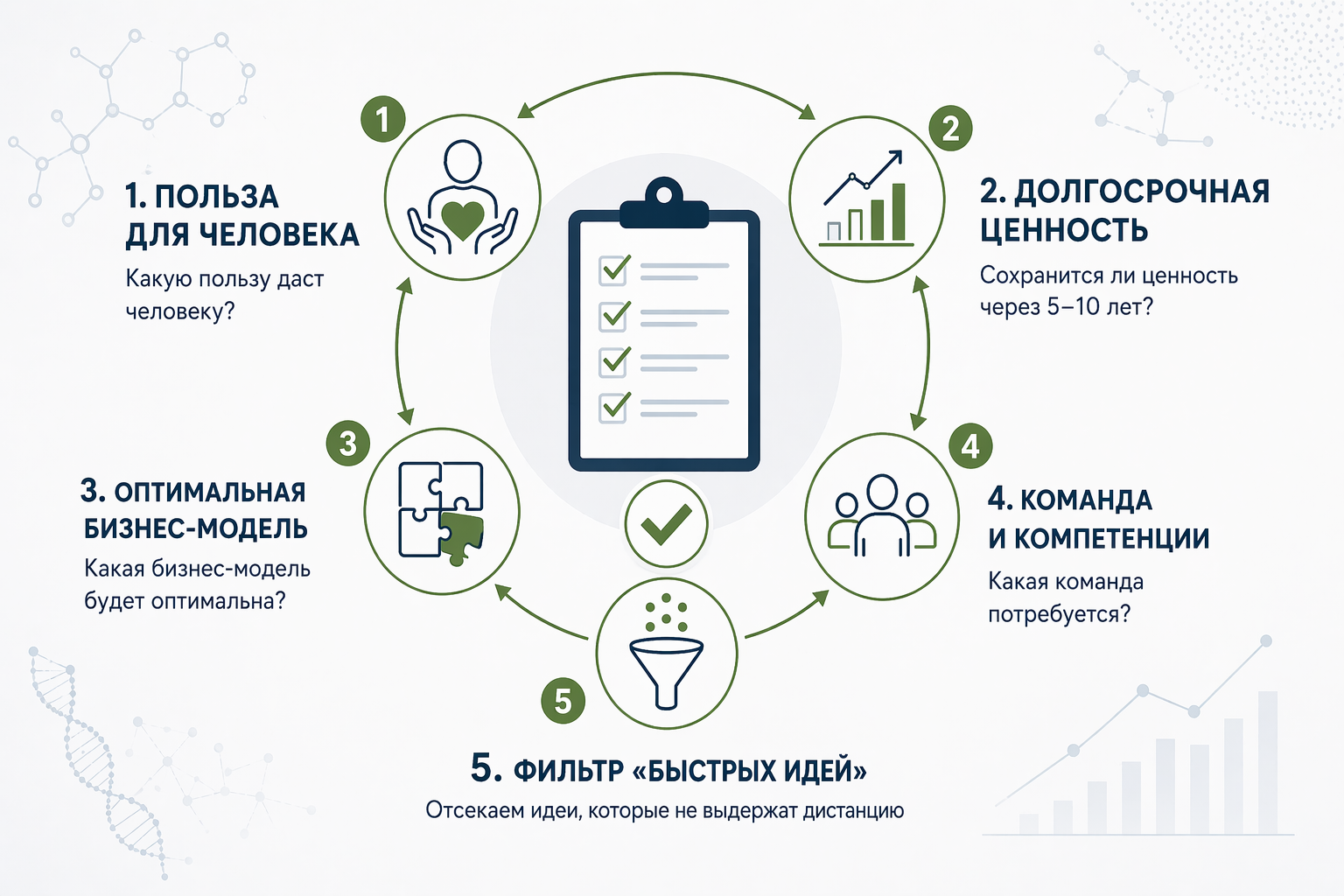
To decide which business to start, write down:
This checklist will help you weed out most of those "quick ideas" that look attractive at the start but don't go the distance.
- What specific benefit the business will provide to a person.
- Will this value still be relevant in 5-10 years? Consider options for business development, adaptation, growth, and niche transformation. This will help you stay relevant in the future and stand out from the competition.
- Which business model option will be optimal.
- What kind of team and competencies the business will require.
This checklist will help you weed out most of those "quick ideas" that look attractive at the start but don't go the distance.
What kind of business people need: a checklist
To decide which business to start, write down:
This checklist will help you weed out most of those "quick ideas" that look attractive at the start but don't go the distance.
- What specific benefit the business will provide to a person.
- Will this value still be relevant in 5-10 years? Consider options for business development, adaptation, growth, and niche transformation. This will help you stay relevant in the future and stand out from the competition.
- Which business model option will be optimal.
- What kind of team and competencies the business will require.
This checklist will help you weed out most of those "quick ideas" that look attractive at the start but don't go the distance.
Personal experience as a quality filter
At age 40, it was important for Dmitry Laevsky to maintain his health and youth. He saw specific benefits in this for himself and people with similar values. This helped him decide which business to choose: one that helps improve quality of life, preserve internal resources, and restore the body's natural potential, rather than providing momentary stimulation.
- The company started by launching anti-age products. But the market quickly showed: people aren't interested in anti-aging, but in how energetic a person is. We shifted our positioning from anti-age to extending youth and producing natural energy boosters.
The next niche transformation was based on which business better meets the need for preserving internal resources. "At 44, I suffered a stroke, and the topic of recovery became practical for me, not philosophical. I tested the company's first flagship product on myself. I saw no point in working with placebos; I looked for components that help cope with the physical, cognitive, and psychological consequences of a stroke," recalls Dmitry Laevsky.
- The company started by launching anti-age products. But the market quickly showed: people aren't interested in anti-aging, but in how energetic a person is. We shifted our positioning from anti-age to extending youth and producing natural energy boosters.
The next niche transformation was based on which business better meets the need for preserving internal resources. "At 44, I suffered a stroke, and the topic of recovery became practical for me, not philosophical. I tested the company's first flagship product on myself. I saw no point in working with placebos; I looked for components that help cope with the physical, cognitive, and psychological consequences of a stroke," recalls Dmitry Laevsky.
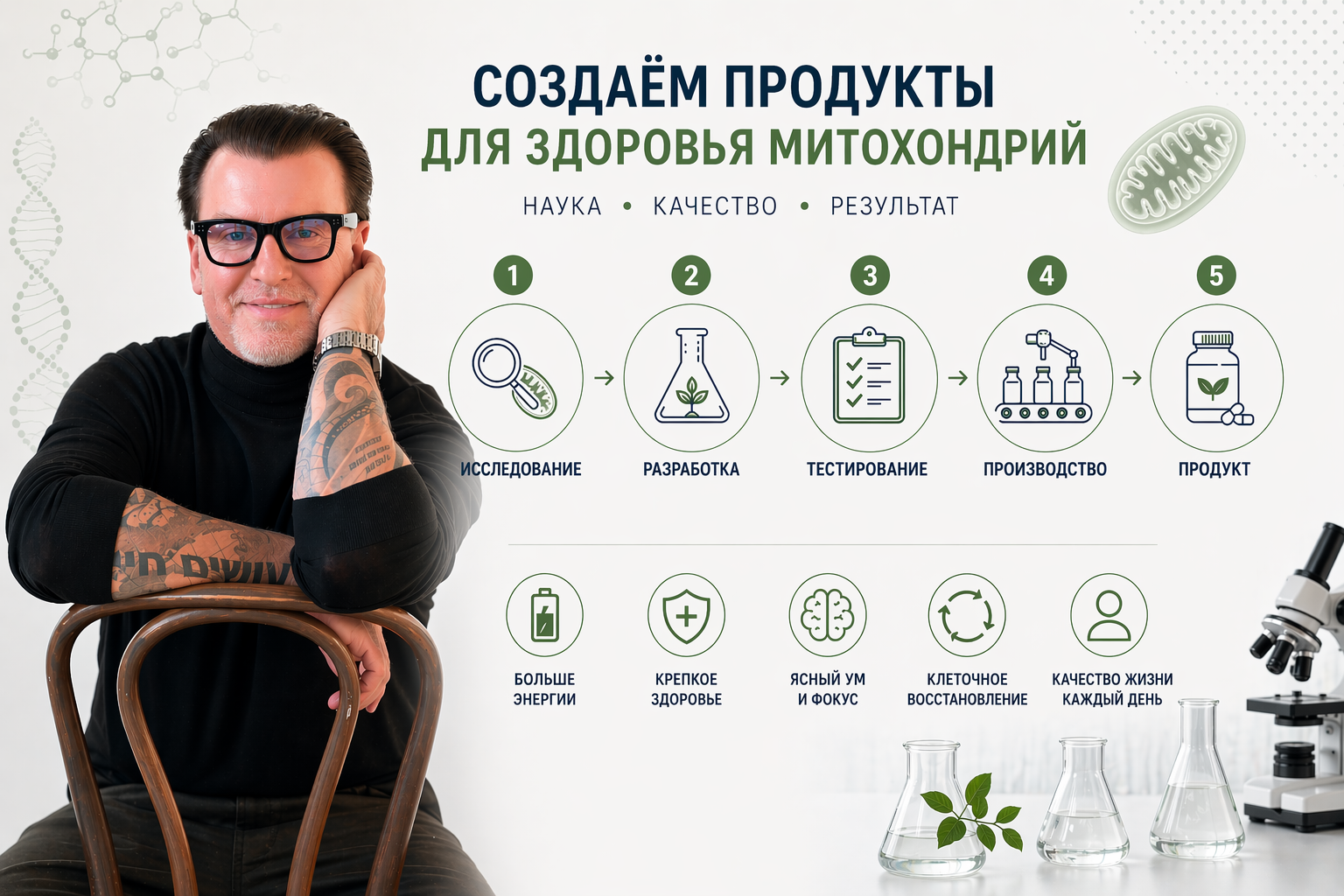
Personal experience, including a stroke and recovery, finally confirmed: the team is moving in the right direction. Thus, the company's focus shifted toward systemic work with quality of life and internal energy preservation mechanisms — where the value is not short-term, but fundamental.
Personal experience as a quality filter
At age 40, it was important for Dmitry Laevsky to maintain his health and youth. He saw specific benefits in this for himself and people with similar values. This helped him decide which business to choose: one that helps improve quality of life, preserve internal resources, and restore the body's natural potential, rather than providing momentary stimulation.
- The company started by launching anti-age products. But the market quickly showed: people aren't interested in anti-aging, but in how energetic a person is. We shifted our positioning from anti-age to extending youth and producing natural energy boosters.
The next niche transformation was based on which business better meets the need for preserving internal resources. "At 44, I suffered a stroke, and the topic of recovery became practical for me, not philosophical. I tested the company's first flagship product on myself. I saw no point in working with placebos; I looked for components that help cope with the physical, cognitive, and psychological consequences of a stroke," recalls Dmitry Laevsky.
- The company started by launching anti-age products. But the market quickly showed: people aren't interested in anti-aging, but in how energetic a person is. We shifted our positioning from anti-age to extending youth and producing natural energy boosters.
The next niche transformation was based on which business better meets the need for preserving internal resources. "At 44, I suffered a stroke, and the topic of recovery became practical for me, not philosophical. I tested the company's first flagship product on myself. I saw no point in working with placebos; I looked for components that help cope with the physical, cognitive, and psychological consequences of a stroke," recalls Dmitry Laevsky.
Personal experience, including a stroke and recovery, finally confirmed: the team is moving in the right direction. Thus, the company's focus shifted toward systemic work with quality of life and internal energy preservation mechanisms — where the value is not short-term, but fundamental.
How to form your own category step by step
What kind of business can you invest in with minimal risks? One that is continuously evolving. Initially, VILAVI chose the anti-age direction but didn't fixate on it. Flexibility and timely repositioning helped us not only grow steadily but also eventually find our own unique niche.
The company's step-by-step movement was as follows:
- This path allowed us not only to expand our range but also to gradually form our own category of product manufacturing for mitochondrial health. In essence, we didn't enter a ready-made market — we built it step by step. We moved from clear requests to the deeper causes of decreased energy and endurance. That's how I found my "blue ocean." I described this entrepreneurial experience, with its doubts and discoveries, in the book “Malandrao Saltitante”, which I released in 2024 under the pseudonym Leon Malan," explained Dmitry Laevsky.
The company's step-by-step movement was as follows:
- Step 1. Creating anti-age products.
- Step 2. Creating natural energy drinks.
- Step 3. Creating products to preserve the body's resources.
- Step 4. Creating products for mitochondrial health.
- This path allowed us not only to expand our range but also to gradually form our own category of product manufacturing for mitochondrial health. In essence, we didn't enter a ready-made market — we built it step by step. We moved from clear requests to the deeper causes of decreased energy and endurance. That's how I found my "blue ocean." I described this entrepreneurial experience, with its doubts and discoveries, in the book “Malandrao Saltitante”, which I released in 2024 under the pseudonym Leon Malan," explained Dmitry Laevsky.
Why mitochondrial health specifically
If you are still at the stage of searching for what business to open, take a closer look at the longevity field. Longevity is a concept of active aging that creates conditions for a physically, mentally, and socially prosperous life. Mitochondrial health is the base and foundation of longevity.
The mitochondrion is an organelle, a part of the cell responsible for energy production in the body. The state of your mitochondria is directly linked to endurance, recovery speed, cognitive function, and the ability to stay young longer (Cell, 2022; Frontiers in Physiology, 2024). A separate strong direction is the link between mitochondria and skin aging (Frontiers in Physiology, 2023).
From a business perspective, several factors coincide in the mitochondrial health niche at once:
- If 10-15 years ago the word "mitochondria" caused confusion, today the topic of mitochondrial health is entering the mainstream agenda, - says Dmitry Laevskiy. - People increasingly want to understand what gives them energy — and why it disappears.
The mitochondrion is an organelle, a part of the cell responsible for energy production in the body. The state of your mitochondria is directly linked to endurance, recovery speed, cognitive function, and the ability to stay young longer (Cell, 2022; Frontiers in Physiology, 2024). A separate strong direction is the link between mitochondria and skin aging (Frontiers in Physiology, 2023).
From a business perspective, several factors coincide in the mitochondrial health niche at once:
- a growing 45+ audience interested in active longevity, as well as visual and physical youth extension;
- a shift from symptomatic solutions to working with root causes;
- high long-term customer value;
- a market that is still far from saturation.
- If 10-15 years ago the word "mitochondria" caused confusion, today the topic of mitochondrial health is entering the mainstream agenda, - says Dmitry Laevskiy. - People increasingly want to understand what gives them energy — and why it disappears.
What business is profitable in terms of format
The product distribution model often causes more debate than the product itself, notes the president of VILAVI.
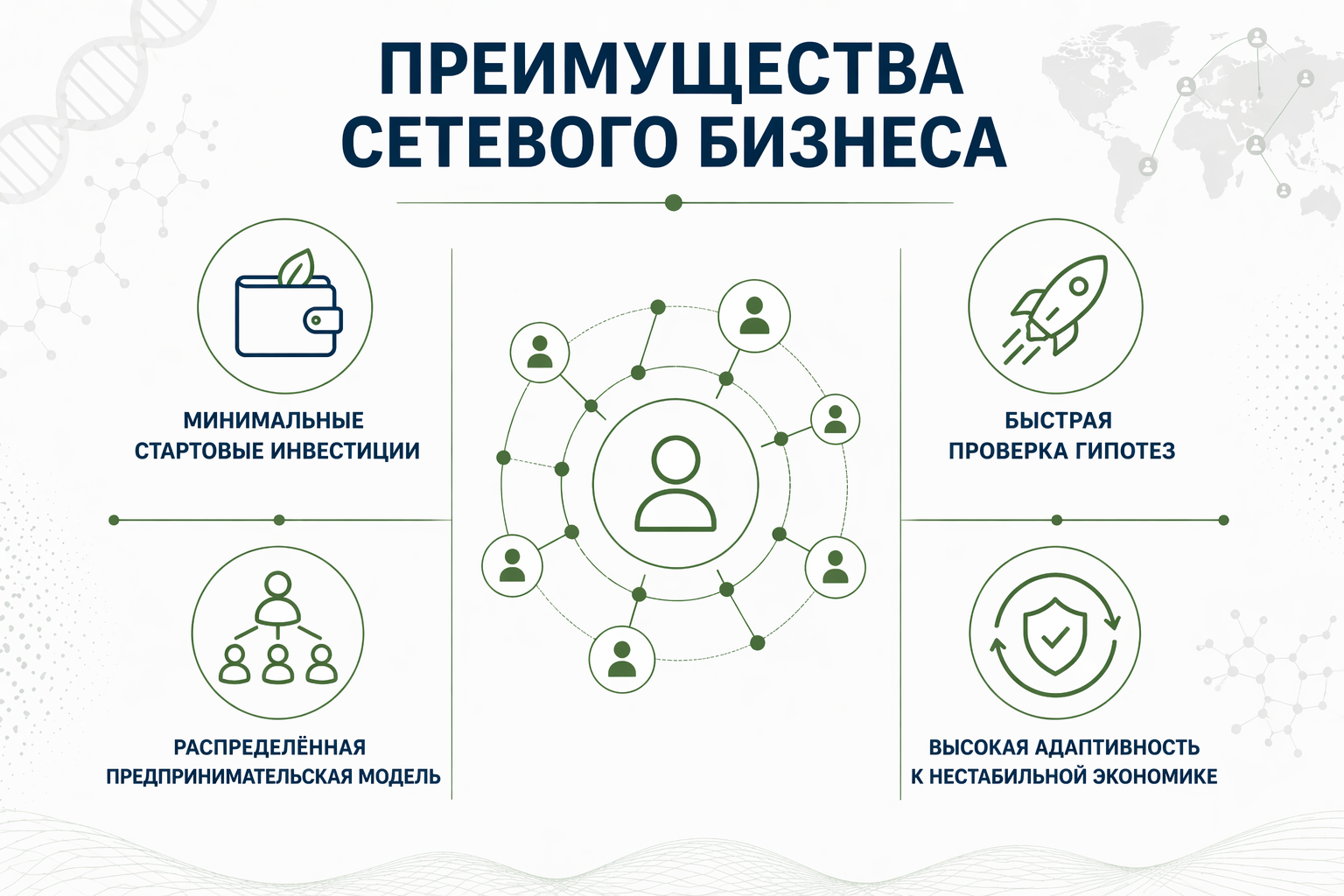
- In my case, the choice fell on the network format as an accessible scaling tool. In 2026, the network business format remains interesting and potentially profitable for several reasons:
My experience in the network business is 32 years, the last 15 of which have been in the niche of active longevity and mitochondrial health. During this time, we've seen that the network model can be flexible and resilient if it relies on clear processes and systemic management.
The past year 2025 can't be called simple: there were a number of crisis moments in the global and local economy, and significant changes in legislation. But the company's structure didn't "sag"; it continued to grow. In practice, this is explained simply: it's easier for people to enter an already working business with fine-tuned processes, a product from a high-demand category, and a clear infrastructure where you don't need to build logistics, service, and promotion from scratch. In unstable years, this advantage becomes especially noticeable, says Dmitry Laevsky.
- minimal startup investment;
- fast hypothesis testing;
- distributed entrepreneurial model;
- high adaptability to an unstable economy.
My experience in the network business is 32 years, the last 15 of which have been in the niche of active longevity and mitochondrial health. During this time, we've seen that the network model can be flexible and resilient if it relies on clear processes and systemic management.
The past year 2025 can't be called simple: there were a number of crisis moments in the global and local economy, and significant changes in legislation. But the company's structure didn't "sag"; it continued to grow. In practice, this is explained simply: it's easier for people to enter an already working business with fine-tuned processes, a product from a high-demand category, and a clear infrastructure where you don't need to build logistics, service, and promotion from scratch. In unstable years, this advantage becomes especially noticeable, says Dmitry Laevsky.
What business is profitable in terms of format
The product distribution model often causes more debate than the product itself, notes the president of VILAVI.
- In my case, the choice fell on the network format as an accessible scaling tool. In 2026, the network business format remains interesting and potentially profitable for several reasons:
My experience in the network business is 32 years, the last 15 of which have been in the niche of active longevity and mitochondrial health. During this time, we've seen that the network model can be flexible and resilient if it relies on clear processes and systemic management.
The past year 2025 can't be called simple: there were a number of crisis moments in the global and local economy, and significant changes in legislation. But the company's structure didn't "sag"; it continued to grow. In practice, this is explained simply: it's easier for people to enter an already working business with fine-tuned processes, a product from a high-demand category, and a clear infrastructure where you don't need to build logistics, service, and promotion from scratch. In unstable years, this advantage becomes especially noticeable, says Dmitry Laevsky.
- minimal startup investment;
- fast hypothesis testing;
- distributed entrepreneurial model;
- high adaptability to an unstable economy.
My experience in the network business is 32 years, the last 15 of which have been in the niche of active longevity and mitochondrial health. During this time, we've seen that the network model can be flexible and resilient if it relies on clear processes and systemic management.
The past year 2025 can't be called simple: there were a number of crisis moments in the global and local economy, and significant changes in legislation. But the company's structure didn't "sag"; it continued to grow. In practice, this is explained simply: it's easier for people to enter an already working business with fine-tuned processes, a product from a high-demand category, and a clear infrastructure where you don't need to build logistics, service, and promotion from scratch. In unstable years, this advantage becomes especially noticeable, says Dmitry Laevsky.
What business will survive in 2026: trends
A new business, just like an established one, needs to be adapted to external conditions in a timely manner.
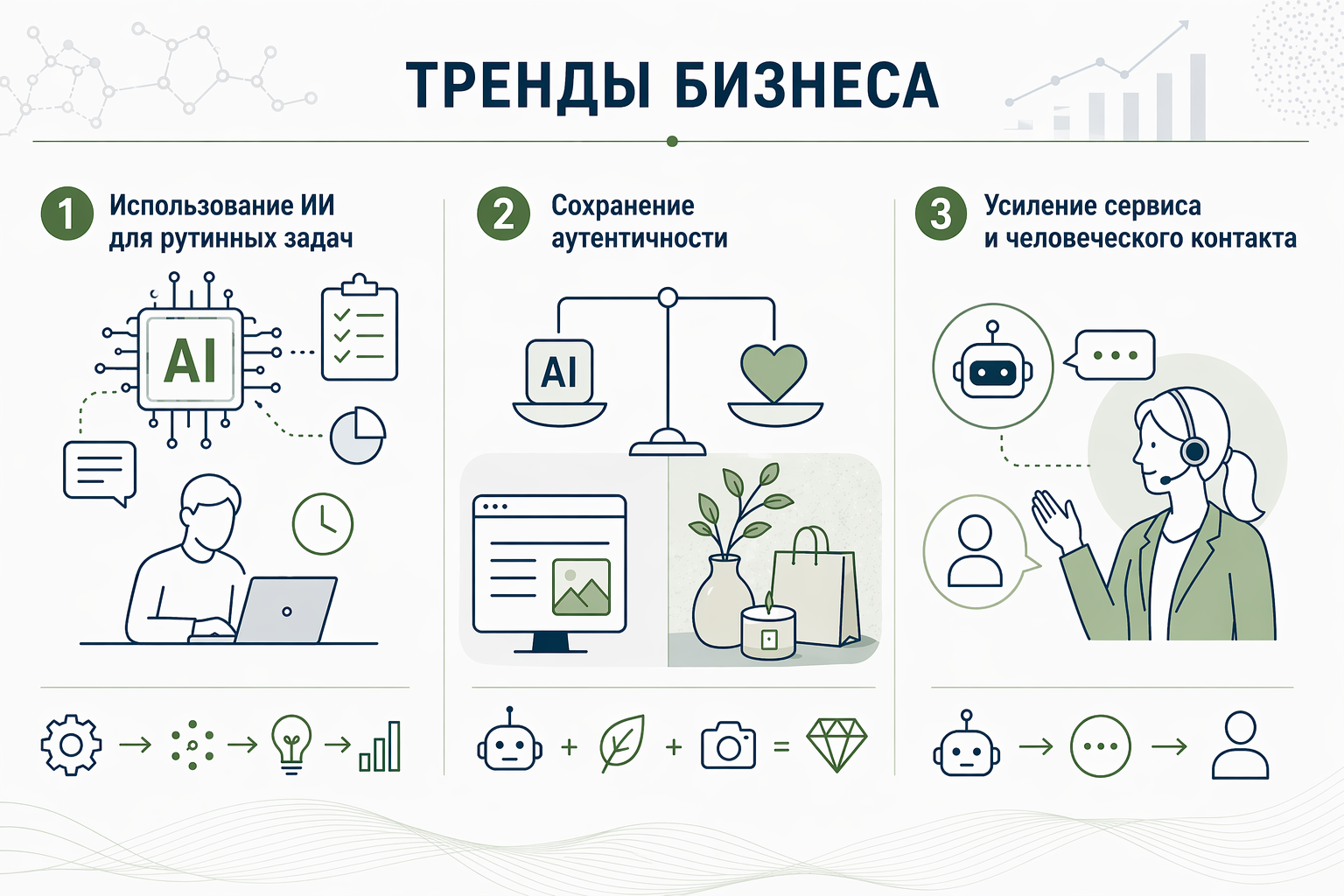
Based on his experience, Dmitry Laevsky noted three trends without which it will be difficult for a business to remain effective in 2026:
- Using AI for routine tasks. AI is not a replacement for people, but a tool to free up time for strategic and creative work. In our company, it is used for generating ideas, texts, analytics, and content preparation.
- Preserving authenticity. Excessive automation and "plastic" content reduce trust. Craftsmanship and tactility give a sense of comfort and closeness to the brand. The balance between AI content and natural visuals is becoming a competitive advantage.
- Strengthening service and human contact. Against a backdrop of instability, people especially value attention and care. Bots and AI assistants are effective for simple tasks, but key interaction remains with people.
What business will survive in 2026: trends
A new business, just like an established one, needs to be adapted to external conditions in a timely manner.
Based on his experience, Dmitry Laevsky noted three trends without which it will be difficult for a business to remain effective in 2026:
- Using AI for routine tasks. AI is not a replacement for people, but a tool to free up time for strategic and creative work. In our company, it is used for generating ideas, texts, analytics, and content preparation.
- Preserving authenticity. Excessive automation and "plastic" content reduce trust. Craftsmanship and tactility give a sense of comfort and closeness to the brand. The balance between AI content and natural visuals is becoming a competitive advantage.
- Strengthening service and human contact. Against a backdrop of instability, people especially value attention and care. Bots and AI assistants are effective for simple tasks, but key interaction remains with people.
Conclusion: which business is the most effective
The traditional longevity market (biotech, therapy) is estimated at approximately $31.6 billion in 2026 and could grow to $46.9 billion by 2031, with a CAGR of about 8.2% over the next five years (Mordor Intelligence, 2026). The global longevity market (everything related to the life and health of people 45+) could grow to approximately $8 trillion by 2030 (UBS, 2025).
In 2025, the mitochondrial medicine market was valued at $460 million with growth potential up to $1.02 billion by 2035 at a CAGR of about 7.8% (Future Market Insights, 2025).
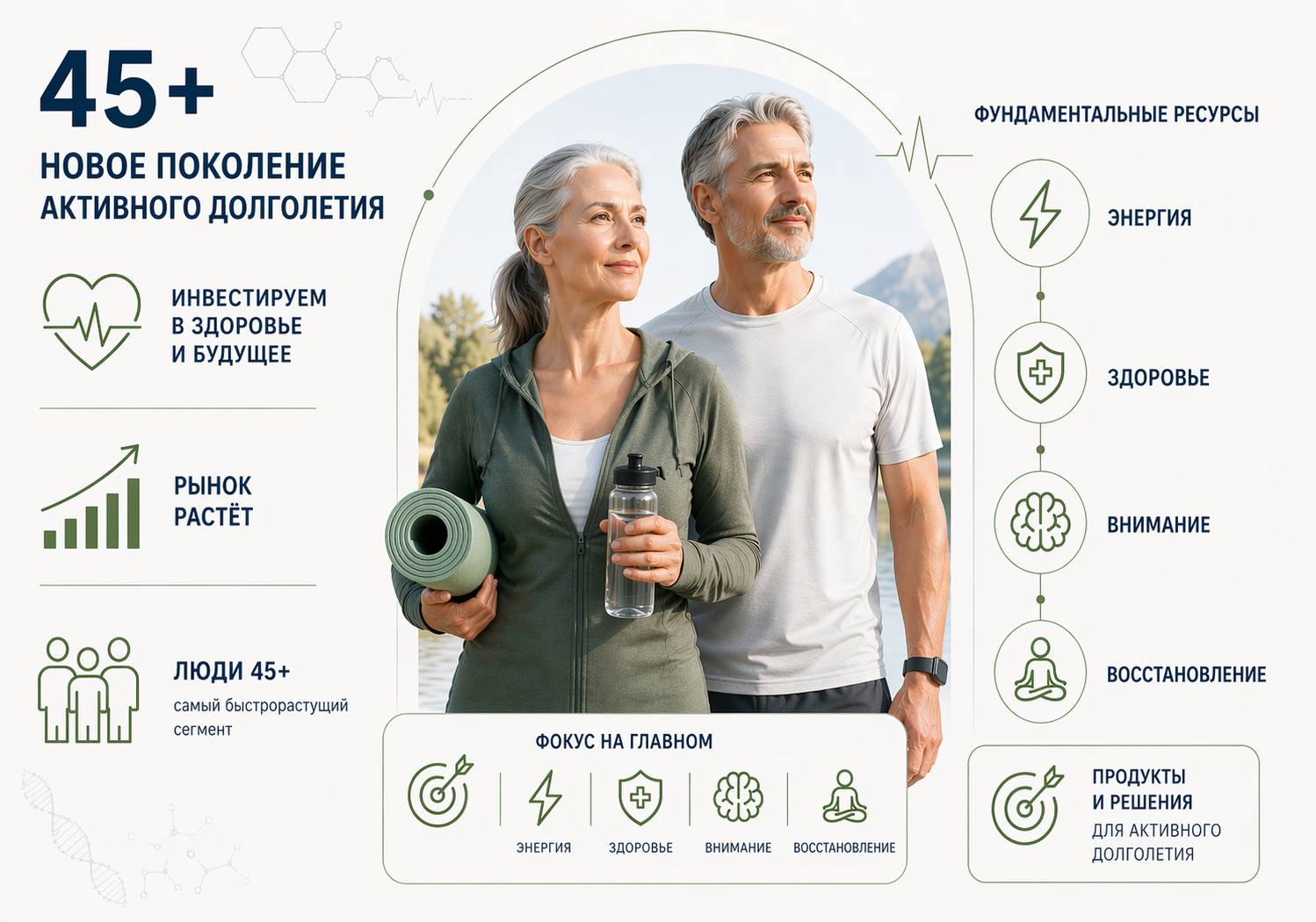
The growing segment of people aged 45+ is increasingly investing in health, prevention, long-term well-being, and products for active longevity. Therefore, in 2026, one of the most effective businesses will be one that works with fundamental human resources: energy, health, attention, and the ability to recover.
"I bet on mitochondrial health because energy is the new currency. And businesses that know how to work with it get a chance to stay relevant over the long haul," says VILAVI President Dmitry Laevsky.
The growing segment of people aged 45+ is increasingly investing in health, prevention, long-term well-being, and products for active longevity. Therefore, in 2026, one of the most effective businesses will be one that works with fundamental human resources: energy, health, attention, and the ability to recover.
"I bet on mitochondrial health because energy is the new currency. And businesses that know how to work with it get a chance to stay relevant over the long haul," says VILAVI President Dmitry Laevsky.
Conclusion: which business is the most effective
The traditional longevity market (biotech, therapy) is estimated at approximately $31.6 billion in 2026 and could grow to $46.9 billion by 2031, with a CAGR of about 8.2% over the next five years (Mordor Intelligence, 2026). The global longevity market (everything related to the life and health of people 45+) could grow to approximately $8 trillion by 2030 (UBS, 2025).
In 2025, the mitochondrial medicine market was valued at $460 million with growth potential up to $1.02 billion by 2035 at a CAGR of about 7.8% (Future Market Insights, 2025).
The growing segment of people aged 45+ is increasingly investing in health, prevention, long-term well-being, and products for active longevity. Therefore, in 2026, one of the most effective businesses will be one that works with fundamental human resources: energy, health, attention, and the ability to recover.
"I bet on mitochondrial health because energy is the new currency. And businesses that know how to work with it get a chance to stay relevant over the long haul," says VILAVI President Dmitry Laevsky.
The growing segment of people aged 45+ is increasingly investing in health, prevention, long-term well-being, and products for active longevity. Therefore, in 2026, one of the most effective businesses will be one that works with fundamental human resources: energy, health, attention, and the ability to recover.
"I bet on mitochondrial health because energy is the new currency. And businesses that know how to work with it get a chance to stay relevant over the long haul," says VILAVI President Dmitry Laevsky.